Author: Richa Mukati
December 26th, 2025
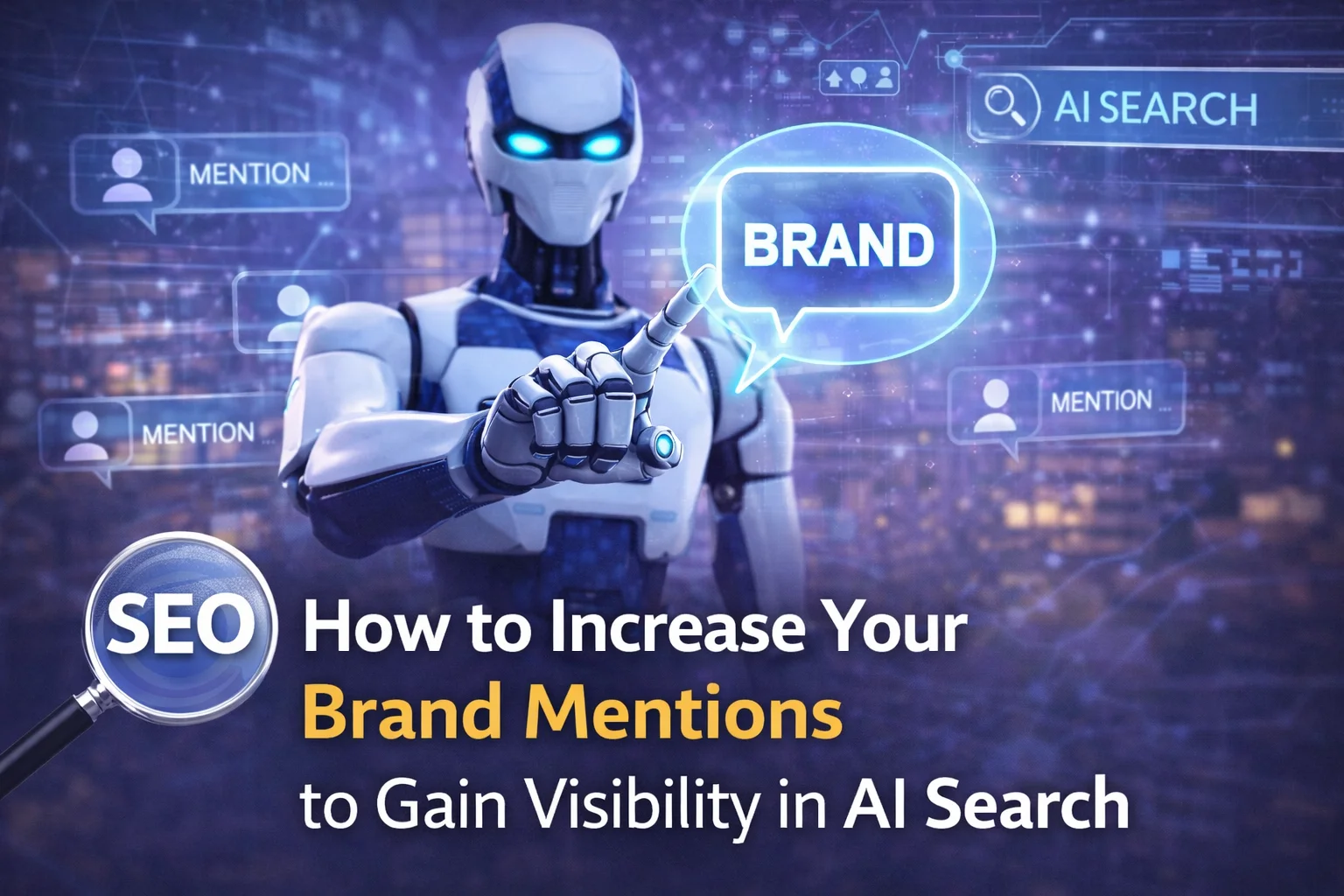


Rankings still matter. But they don’t tell the whole story anymore because Google is answering more queries right on the results page. In AI Overviews and AI Mode, a user often gets a summary and a shortlist of brands before they ever visit a site. If you’re not named there, you’re not even in the running.
That’s why brand mentions have become a real visibility driver. Not the fake kind. Real mentions where someone explains what you do and why you’re an option. When your name shows up across credible places—reviews, comparisons, editorials, community threads—Google has more confidence that you’re part of the category. And confidence is what gets you included.
Brand mentions are anytime your company is named online—linked or unlinked—in a context that helps people understand what you do. They matter in AI search because AI answers often name brands that show up repeatedly across trusted sources for the same topic, even when those brands aren’t the top-ranking result.
AI answers are built from patterns across a lot of public writing. Think of it like this: Google is trying to explain the market quickly, with as few wrong calls as possible. So it tends to name brands it has “seen” many times in the same context.
A mention works when it connects three things:
Links can help, but they aren’t always required for your name to show up in the answer. I’ve watched plenty of AI results reference companies without linking to them. The system isn’t always trying to send traffic. It’s trying to be accurate.
Here’s the part most people miss: repetition across different sources beats one big win. One great article helps. Ten smaller, credible mentions that all describe you the same way helps more.
Most meaningful mentions come from places buyers already use to make decisions.
Trade publications, newsletters, podcasts, analyst blogs, journalist quotes. These mentions tend to be descriptive, which is exactly what AI summaries pull from.
Not just star ratings. The gold is in the wording: “We chose them because…” Reviews that include the buyer type and the outcome are the ones that travel.
Reddit, niche Slack/Discord groups, industry boards, founder communities. It’s messy, but it’s where real comparison shopping happens.
LinkedIn, X, YouTube, TikTok. The posts themselves aren’t always the point. The ripple effect is. People see your name, then search it later.
“Best tools for…,” “Top agencies for…,” “Stacks we use.” These lists place you inside the category story next to other known options.
“Brand A vs Brand B,” “alternatives,” “best for small teams,” “pricing breakdown.” This is the language buyers use, so it’s the language AI can reuse.
Some tactics create noise, not visibility.
If the mention doesn’t help a human decide, it usually won’t help you get named in AI answers.
You don’t “get” mentions by asking harder. You earn them by being easy to reference.
Give people lines they can reuse without rewriting. Not taglines. Opinions. Clear takes.
Why it works: writers and creators repeat clean sentences. AI systems repeat clean sentences too.
Definition posts are crowded. Decision posts earn mentions:
Why it works: the web references practical guidance, not broad explanations.
Pick two or three communities and show up consistently. Answer like a person. Bring examples. Don’t treat every reply as a pitch.
Why it works: repeated, helpful participation turns your brand into a default suggestion from other people.
A few formats that consistently earn mentions:
Why it works: people mention what they share, and they share what reduces their work.
Generic testimonials don’t spread. Specific stories do. Name the audience, the problem, and the change.
Why it works: specificity creates a stronger association between your brand and a result.
Mentions tend to create three outcomes that compound.
People hear your name, then look you up later. That demand is durable.
When independent sources describe you in consistent ways, it’s easier for Google to treat you as a legitimate option in the category.
Even if your site isn’t the page being cited, your brand can still be named in the answer because the broader web already explains where you fit.
It’s not magic. It’s pattern recognition plus consistency.
Yes. They often lead to more branded searches and stronger trust around what your brand is known for.
Sometimes. Backlinks still matter, but a strong mention in the right review, comparison, or editorial can influence AI answers even without a link.
They tend to name brands that appear repeatedly across credible sources in the same context, with consistent descriptions.
Often, yes. AI answers can reference brand names without linking because the name helps complete the summary.
Be clear about your positioning, publish decision-helping content, show up in the right communities, and create pages people genuinely reference.
A major mention can show results quickly. Most brands see steadier movement over a few months of consistent, credible mentions.
If you want to show up in AI search, stop treating mentions as a bonus. Treat them like a system: clear positioning, repeatable language, real proof, and steady presence in the sources buyers already trust. Do that and you’ll usually see two things rise together—branded search demand and how often you get named in AI summaries. If you need help building that kind of visibility through strategy, content, and authority (without shortcuts), Cibirix – Digital Marketing Agency is built for that lane.

Richa Mukati serves Cibirix as a Brand and Content Strategist, where she’s passionate about how creative concepts and targeted marketing messages can create positive, game-changing images for our business clients among their intended audiences. How does Richa help make this happen? She wields a crisp, compelling business sense that is backed by sharp, strategic thinking which aims for the target of meeting desired market success for our clients. Richa has extensive experience in marketing communication, and clients continue to seek her advice and trust her branding and content strategies which have resulted in measurable results. When not hard at work developing brand and content strategies, Richa enjoys meditating and binge reading.